- Details
-
Parent Category: Activities
-
Category: Workshops
-
Published: Thursday, 30 May 2013 12:37
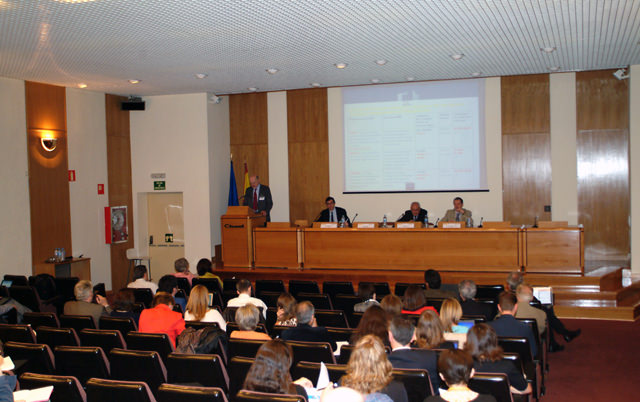
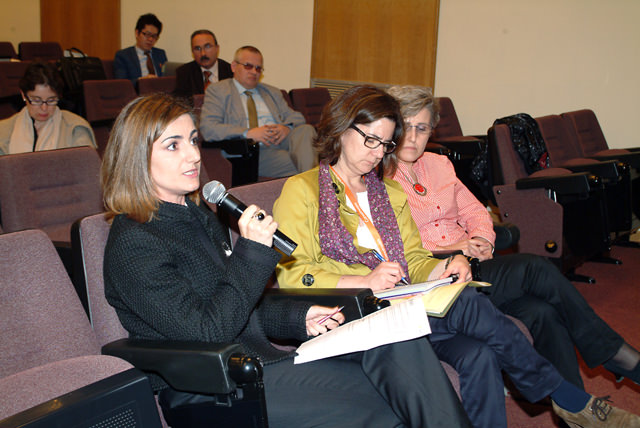
This Topical Workshop has been organised at the initiative of the NERIS Working Group on Contaminated Goods, focussing on international experiences in the management of contaminated foodstuff and other goods after Chernobyl and Fukushima accidents and particularly in Japan, Belarus, Norway and the UK: experts and other stakeholders from these countries have been invited for presenting their feedback on these issues. International organisations (e.g. IAEA, EC, FAO, NEA-OECD) were also expected to share their recent international experiences in the management, monitoring and radioactivity control of goods coming from Japan. At the end of the workshop, a round table has been organised to discuss the lessons learned and challenges for the management of contaminated goods.
Please see hereinafter the program of the meeting and the presentations:
-
Opening - Michel Hugon
-
Introduction - Jean-François Lecomte
-
The management of contaminated food in Norway following the Chernobyl accident - Lavrans Skuterud
-
The management of contaminated sheep in North Wales and Cumbria regions in the UK following the Chernobyl accident - Anne Nisbet
-
The evolution of the management of agricultural products in Belarus following the Chernobyl accident - Iossif Bogdevitch
-
The European Union Framework for the management of contaminated goods - Augustin Janssens
-
IAEA work programme on the control of foodstuff and commodities - Igor Gusev
-
International standards with regard to restriction/replacement of contaminated food, milk and drinking water in the accident State/affected States - Vladimir Kutkov
-
The national framework for the management of foddstuff in Japan following the Fukushima accident - Nobuyuki Hamada
-
Activities of the join FAO/IAEA Division related to Fukushima, including recent initiatives with the join FAO/WHO Codex Alimentarius Commission concerning thereview of the Codex Guideline Levels for radionuclides in food - Ivancho Naletoski
-
Surface-contaminated non-food goods in the Netherlands after distant nuclear accidents - Teun van Dillen
-
Lessons learned from Fukushima by a Member State decision-maker: how to manage a post-accidental situation taking into account scientific and political considerations - David Brouque
- First lessons on the management of agricultural products in the Fukushima Prefecture - Ishii Hideki and Ryota Koyama
- Details
-
Parent Category: Activities
-
Category: Workshops
-
Published: Monday, 06 February 2012 14:05
6-8 February 2012
![By Rafikk (Originally from en.wikipedia) [CC-BY-SA-2.0 (http://creativecommons.org/licenses/by-sa/2.0)], from Wikimedia Commons](/images/activities/workshops/2012-02/Bratislava_divadlo.jpg) The first NERIS Workshop on "Preparedness for Nuclear and Radiological Emergency Response and Recovery: Implementation of the ICRP Recommendations" has been organised in Bratislava, Slovak Republic between the 6th and 8th of February 2012. 88 persons from 26 different countries participated.
The first NERIS Workshop on "Preparedness for Nuclear and Radiological Emergency Response and Recovery: Implementation of the ICRP Recommendations" has been organised in Bratislava, Slovak Republic between the 6th and 8th of February 2012. 88 persons from 26 different countries participated.
6 February 2012
14:00 Opening
Welcome address from the host organization - P. Liska, VUJE Deputy General Director
14:15 Introduction (chair: W. Raskob)
- NERIS Platform - An Attempt to Enhance European Response to and Recovery from Radiological Emergencies - R. Mustonen, NERIS Platform president - Presentation
- Application of the ICRP recommendations for the protection of individuals in emergency exposure situations and living in long-term contaminated areas after an accident - J. Lochard, ICRP - Presentation
- Japanese Earthquake and Fukushima nuclear accident - radiation protection issues - T. Homma, Jaea - Presentation
16:30 Plenary session I: ICRP recommendations and their application (chair: J. Lochard)
- EC BSS status and perspective, and European response to the Fukushima accident - A. Janssens, EC - Presentation
- The IAEA Basic Safety Standards - its implementation - T. Boal / R. Czarwinski, IAEA - Presentation
- Recent Recommendations on Emergency Exposure Situations and a Discussion on Setting Reference Levels with NEA Perspective H. B. Okyar, OECD/NEA - Presentation
- Upscaling industry RP measures for emergency and post-emergency and the need for refinements further to the ICRP general recommendations - S. Saint-Pierre, WNA - Presentation
7 February 2012
09:00 Plenary Session II: methodological aspects and updates of computational models (chair: E. Gallego)
- Methodological aspects of the ICRP recommendations implementation - W. Raskob, KIT - Presentation
- Computational models update - C. Landman, KIT - Presentation
- On the current needs in European decision support tools for contamination areas - K. G. Andersson, Risoe/DTU - Presentation
- Case study on the improved use of collective dose for nuclear and/or radiological emergencies - J. Camps, SCK.CEN - Presentation
10:30 Plenary Session III: case studies in National experiences (chair: D. Oughton)
- Emergency Exposure Situations: IAEA safety stan- dards and guidance - E. Buglova, IAEA - Presentation
- Activities in Germany related to ICRP 103 - W. Raskob, KIT - Presentation
- Planned reference and intervention levels in Finland - R. Mustonen, STUK - Presentation
- Application of ICRP recommendations in the UK - A. Nisbet, HPA - Presentation
- Remote monitoring of nuclear power plants in Baden-Wuerttemberg - From measurement to emergency protection - T. Wilbois et al., KFU - Presentation
11:30 Plenary Session IV: keying up the break-out groups - Workshops and table-top exercises/ Facilitated discussion sessions (chair: T. Duranova)
- Overview of Workshops and table-top exercise - C. Landman - Presentation
- Overview of topic 1: Regulatory challenges in the preparation for an emergency and how simulation models may support this - moderator: R. Mustonen
- Overview of topic 2: Challenges in the practical implementation of countermeasure strategies and their optimisation during an emergency and how simulation models can support this - moderator: W. Raskob
- Overview of topic 3: Challenges in the practical implementation of countermeasure strategies and their optimisation in existing exposure situations and how decision aiding tools can support this - moderator: A. Nisbet - Presentation
- Overview of topic 4: Societal and communication issues and how decision aiding tools might support this - moderator: D. Oughton - Presentation
14:00 Break-out groups I - Workshops and Table-Top exercises (parallel sessions, 1,5 hrs)
16:00 Break-out groups II - Facilitated discussions sessions (parallel sessions, 1,5 hrs)
8 February 2012
09:00 Plenary Session V: Summary reports from break-out groups
- Summary report from Break-out Group on table- top exercise and topic 1 - R. Mustonen - Presentation
- Summary report from Break-out Group on table- top exercise and topic 2 - W. Raskob - Presentation
- Summary report from Break-out Group on table- top exercise and topic 3 - A. Nisbet - Presentation
- Summary report from Break-out Group on table- top exercise and topic 4 - D. Oughton - Presentation
11:00 Plenary discussion/discussion forum (Chair: J. Lochard, moderators of break-out sessions: R. Mustonen, W. Raskob, A. Nisbet, D. Oughton)
- Workshops and table-top exercise Facilitated discussion sessions
12:00 Synthesis of outcomes: conclusions and recommendations, identification of key issues and direction forward (J. Camps, SCK.CEN) - Presentation
Main findings of the Workshop presented during the IRPA Congress in Glasgow: ICRP Workshop-NERIS_IRPA13